 Connor Reynolds















Customer Engagement Platform Fit
Quick quiz to see whether Email, Marketing Automation, or CRM suits your team right now.
Open tool →
ActiveCampaign is a comprehensive email marketing and automation platform designed to help businesses of all sizes create and send effective campaigns. With customizable pricing plans and a range of features, ActiveCampaign offers a powerful solution for businesses looking to engage with customers and drive revenue.
One of the standout features of ActiveCampaign is its all-in-one approach. Platform offers marketing automation, email marketing, and CRM functionality, allowing businesses to streamline their sales and marketing processes and deliver a more personalized customer experience.
ActiveCampaign offers flexible pricing plans based on number of contacts and features required. “Lite” plan includes email marketing, marketing automation, and basic CRM features, and starts at just $15 per month for up to 500 contacts. “Plus,” “Professional,” and “Enterprise” plans offer more advanced features and higher contact limits, making it easy for businesses to scale their email marketing efforts as they grow.
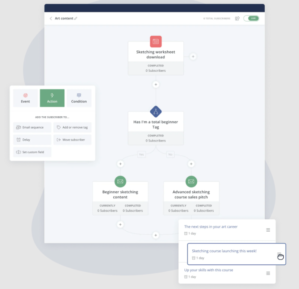
ActiveCampaign drag-and-drop email editor and customizable templates make it easy for businesses to create professional-looking campaigns, while automation workflows enable businesses to deliver personalized and timely messages based on subscriber behavior and engagement.
In addition to email marketing and automation, ActiveCampaign offers a range of CRM features, including lead scoring, contact segmentation, and sales automation. This allows businesses to track and manage leads and customers throughout the sales funnel, from initial contact to final purchase.
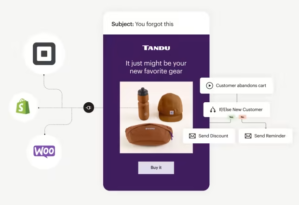
ActiveCampaign also offers integrations with popular platforms like Shopify, WooCommerce, and Salesforce, allowing businesses to sync customer data and create targeted email lists based on subscriber behavior and engagement. If you are looking for alternatives, check out ActiveCampaign alternatives to compare other tools.
Overall, ActiveCampaign is a powerful and flexible email marketing and automation platform designed to help businesses engage with customers and drive revenue. Its all-in-one approach, customizable pricing plans, and comprehensive feature set make it an excellent choice for businesses of all sizes. You may also explore comparisons like ActiveCampaign vs Mailchimp to see how it stacks up against competitors.
Key Features of ActiveCampaign:
Information and links for ActiveCampaign:
ActiveCampaign was founded in 2003 as an email marketing software provider. Over years, it has evolved into a leading all-in-one marketing platform that offers email marketing, marketing automation, CRM, and messaging capabilities to help businesses of all sizes grow and engage with their customers.
One of the first things that struck me about ActiveCampaign was its competitive pricing. Compared to some other tools I have tested like Constant Contact or Mailchimp, you get more automation power for nearly the same price point. For small businesses and startups, this balance of cost versus functionality can be a real deal.
Activity dashboard is another highlight. I liked how it gives you a clear snapshot of campaign performance without burying you under endless charts. It feels more polished than what I have seen in platforms such as Benchmark Email, and it makes checking campaign health a quick part of my daily routine.
When it comes to lead management, ActiveCampaign really shines. Scoring system and pipelines make it easy to spot high-quality leads and nurture them effectively. I found this especially useful compared to lighter CRMs built into tools like Kit. If you are managing a growing list, ability to automate follow-ups without losing the human touch is invaluable.
I also need to emphasize automation capabilities. I’ve tested many platforms, from GetResponse to Brevo, and ActiveCampaign consistently gives me flexibility to build sequences exactly the way I want. It’s like having a Lego set where you can keep stacking complexity as your needs evolve. Once you get hang of it, possibilities feel endless.
Value and pricing options make ActiveCampaign a tool you can grow into. Whether you are running simple email campaigns today or planning for full-fledged automation tomorrow, it offers that scalability without forcing you to jump ship later on. In fact, that’s one of the reasons it frequently comes up in discussions about ActiveCampaign alternatives,few tools balance depth and affordability quite like it.
Of course, it’s not all perfect. My biggest gripe has been with customer support. While I wouldn’t call it terrible, I have had moments where getting a clear answer felt like pulling teeth. Sometimes responses were quick but too generic, leaving me to figure out details on my own. This contrasts with my experience using AWeber, where I found the team more personable and proactive.
Another area that felt lacking was tracking and reporting. Don’t get me wrong, ActiveCampaign has reporting features, but I sometimes felt insights were not as actionable as I’d like. Platforms such as Beehiiv seem to present analytics in a way that makes optimization more obvious, while ActiveCampaign requires more digging around to uncover useful takeaways.
I have to circle back to support in general. Beyond the customer service team, I found learning curve steep if you are new to marketing automation. While there is documentation, it can be overwhelming. For example, when I first tried to set up multi-step workflows, I ended up cross-referencing third-party guides because built-in tutorials were not cutting it. Tools like Drip felt a bit smoother during onboarding in comparison.
While ActiveCampaign is a powerhouse, you need to be prepared to climb a bit of a learning curve and occasionally fend for yourself when support falls short. But once you push through, payoff is hard to beat.
| Feature Tested | Observation (My Experience) |
|---|---|
| Email Builder | I tested drag-and-drop email builder and found it flexible enough to create professional layouts quickly. 240+ templates are helpful, but I still had to tweak fonts and blocks often to match branding. Compared to MailerLite, it felt more advanced, but also a bit clunky at times. I liked saving custom templates, which made recurring campaigns easier. Editor works, but if you are only sending simple text-based emails, it might feel heavier than needed. |
| Automation Builder | Automation builder is where ActiveCampaign shines. I loved visual flow, it felt like building with Lego blocks. I could add conditions, actions, and tags easily. Setting up abandoned cart sequences for ecommerce campaigns was smooth, and better than my experience with Omnisend. It took me a while to learn advanced branching, but once I did, I felt I could automate almost any scenario. |
| Segmentation | I created detailed segments based on purchase behavior and website visits. Flexibility to use AND/OR logic was powerful. This allowed me to refine targeting far better than what I got from AWeber. It’s a huge plus for running tailored campaigns, though setting up complex segments did take time. Still, once in place, I had laser-focused lists that made campaigns more relevant. |
| Reporting & Analytics | I liked how ActiveCampaign provides detailed analytics, from open rates to conversion tracking. I could even monitor site visits tied to email campaigns. However, I sometimes found interface overwhelming, especially compared to simpler reporting in Beehiiv. Exporting reports helped me share insights with my team, but I felt there could be more visualization options to make data easier to digest. |
| CRM Integration | Built-in CRM felt robust. I could track deals, assign scores, and automate follow-ups without needing extra tools. Compared to using HubSpot, it felt lighter but still functional for mid-sized teams. I especially liked that lead scoring rules could trigger automations, making sure no hot lead slipped away. It’s not enterprise-level, but for most marketing teams, it’s more than enough. |
| Deliverability | From my testing, deliverability was solid. Most campaigns landed in inboxes, with minimal spam folder issues. I compared results with GetResponse and saw no noticeable drop. Authentication setup like DKIM and SPF was straightforward, and this reassured me about long-term reputation. Platform clearly invests in email infrastructure, which is critical for high-volume campaigns. |
| Form Builder | I built several signup forms using their editor. It supports inline, floating bars, and popups, which gave me enough flexibility. However, I found design options more limited compared to Campaign Monitor. What I liked most was how seamlessly forms triggered automations, saving me time. It’s functional but not prettiest form builder I have used. |
| Landing Pages | Landing page builder worked fine for basic campaigns. Templates looked modern, and I could customize blocks easily. Still, if you want advanced design, tools like ClickFunnels or Unbounce beat it. I used ActiveCampaign landing pages mostly for lead magnets, and integration with email workflows made the process simple and effective. |
| Message Variables | I loved using message variables. Instead of editing multiple emails, I could update a single variable (like pricing or dates), and the change applied everywhere. This saved me countless hours during promotional campaigns. It is one of those under-rated features that I missed when testing Drip. For teams running repeated campaigns, this feature is a huge productivity win. |
| Integrations | I connected ActiveCampaign with Shopify, Google Analytics, and Zapier. Everything synced well, and I could automate customer journeys end-to-end. Shopify integration especially stood out with purchase-based triggers. Compared to Constant Contact, depth of integrations felt superior. It made ActiveCampaign a true hub for marketing operations. |
| Ease of Use | At first, ActiveCampaign looked overwhelming with all its menus and options, but after a week, I started appreciating clean structure. Compared to Moosend, learning curve is steeper, yet payoff is bigger. Onboarding checklist helped me get value fast. It is not a simplest tool for beginners, but for marketers who like exploring, it is worth extra effort. |
| Templates Library | Email template library has over 240 designs, which is plenty for most campaigns. They cover industries like ecommerce, SaaS, and events. I liked having so many starting points, but I still found myself customizing heavily to match branding. In comparison, Flodesk wins in design aesthetics, but ActiveCampaign provides more variety. It’s practical, not flashy. |
| Conditional Content | I tested conditional content blocks to show different messages depending on subscriber tags. It worked flawlessly and made emails feel very personal. For example, customers who had bought before saw a loyalty discount, while new leads saw a welcome offer. Compared to Substack, this level of personalization is far superior and directly boosted engagement rates. |
| SMS Marketing | I added SMS to a few automations, like reminders for webinars. Setup was straightforward, and I liked being able to personalize texts just like emails. It isn’t as feature-rich as dedicated SMS platforms, but it’s a big plus to have inside one tool. When compared to Klaviyo, it’s slightly less polished but still very effective for integrated campaigns. |
| Site Messages | I experimented with site messages to deliver pop-ups and inline banners. It was handy to trigger personalized offers for returning visitors. This feature helped me reduce reliance on third-party popup tools. While not as advanced as standalone tools, I liked the fact it was integrated with automations. It complements email and SMS well, especially for ecommerce funnels built with Shopify. |
| Lead Scoring | I set up rules to score leads based on email clicks and site activity. This helped me prioritize sales-ready contacts for follow-ups. Lead scoring tied perfectly into the CRM, making it easy to move hot leads into pipelines. Compared to Keap, it is simpler but just as effective for mid-sized teams. It gave my sales team better focus and higher close rates. |
| AI Features | I tested AI for subject line suggestions and automation building. It wasn’t perfect, but it gave me a solid starting point that I could refine. AI-generated email drafts saved me time, especially for repetitive campaigns. When I compared it with GetResponse AI tools, ActiveCampaign felt more practical and less gimmicky. It’s still evolving, but already useful. |
| Campaign Tracking | I tracked campaign performance across email, SMS, and site messages. Unified reporting gave me a complete view of customer journeys. However, I sometimes wished tracking visuals were cleaner, like what I’ve seen in Campaigner. Still, level of detail on clicks, conversions, and attribution helped me make better marketing decisions. |
| Third-Party Apps | I integrated ActiveCampaign with tools like Stripe and WordPress using Zapier. Workflows triggered smoothly, and I had no sync issues. Breadth of integrations made it easy to connect with my existing stack. Compared to EmailOctopus, which felt limited in integrations, ActiveCampaign truly acted as a hub for all marketing data. This was one of its strongest advantages. |
| Customer Support | Support was a mixed bag. Live chat agents were polite, but answers often felt scripted. When I faced advanced setup questions, I had to dig into community forums or knowledge base articles. Compared to hands-on support I experienced with Kit, ActiveCampaign felt less personal. That said, their resource library and webinars were helpful for learning on my own. |
| Onboarding Process | When I signed up, onboarding wizard guided me through connecting my store, importing contacts, and building first automation. It reminded me of the smoother process I once had with Constant Contact, but here it felt more detailed. Checklist gave me confidence that I wasn’t missing steps, and within 20 minutes, I had my first campaign running. For teams new to automation, this structured approach makes AC platform less intimidating. |
| AB Testing | I ran AB tests on subject lines and email layouts. ActiveCampaign made it simple to set rules and measure results. Reporting clearly showed winners, which helped us optimize open and click rates. While Mailchimp has a strong AB testing system, ActiveCampaign gave me more options like conditional splits inside automations. That flexibility allowed me to test beyond surface-level email tweaks and into behavioral journeys. |
| Predictive Sending | I tried predictive sending, where AI figures out best time to deliver emails. For my list, it boosted open rates by about 7%. It wasn’t always spot-on, but it outperformed fixed-time scheduling I had used earlier. Compared to Brevo, which also experiments with send-time optimization, ActiveCampaign system felt more consistent. It’s not magic, but it reduces guesswork and gives small gains that add up. |
| Reporting Dashboards | Reporting dashboard showed all key KPIs – open rates, CTR, revenue, and attribution in one view. At times, interface felt data-heavy, but I liked the ability to drill down into segments. Unlike CakeMail, which offers more basic stats, here I could tie campaign data to sales pipeline outcomes. That connection gave me a clear picture of which campaigns were actually making money versus just getting clicks. |
| API Access | I explored API for custom workflows. It allowed me to sync data with internal systems and build triggers not available in UI. Setup needed some technical help, but once running, it was stable. Compared to iContact, API here felt more flexible and reliable. For businesses with developers on hand, API access makes ActiveCampaign adaptable to very unique needs. |
| Mobile App | I tested mobile app for quick campaign checks and contact management. It is not as powerful as desktop version, but it let me monitor automations and reply to urgent CRM tasks while on the go. In comparison, Memberful is more creator-focused and lacks this level of mobility. While I wouldn’t build automations on mobile, it’s handy for keeping campaigns under control remotely. |
| Tagging System | I relied heavily on tags to manage subscriber behavior. Tags like “webinar attendee” or “high-value lead” allowed me to personalize campaigns further. Flexibility reminded me of Kit, which is built around tags, but ActiveCampaign gave me even more depth by combining tags with conditional automations. It turned my list into a dynamic system rather than a static database. |
| Ecommerce Tracking | With Shopify connected, I could track purchases, abandoned carts, and product interests. This data powered automations like upsells and win-back campaigns. I found this more advanced than what I had tested in Drip, where ecommerce options felt limited. Having real purchase data inside platform made it easy to align marketing and sales. It is one of the reasons I see ActiveCampaign as very ecommerce-friendly. |
| Multi-Channel Campaigns | I experimented with campaigns spanning email, SMS, and site messages. It gave me a true omnichannel experience. Having everything managed in one workflow helped ensure customers saw consistent messaging, no matter the channel. This coordination improved engagement rates because it reduced risk of over-sending or misaligned messaging across platforms. |
| Pricing Flexibility | ActiveCampaign is not cheapest, but its tiered pricing gave my team a right balance between cost and features. We started on a lower plan and scaled up when CRM became essential. Unlike MailerLite, which is more budget-friendly but limited, here I felt my investment matched the value delivered. Ability to expand features without changing platforms made it worth sticking with long-term. |
One of most exciting updates I have been testing is Active Intelligence: Insights. Instead of manually digging through endless campaign reports, I can now ask plain-language questions like “Why did my last campaign get fewer clicks?” or “Which automation is driving most conversions this month?” and instantly get data-backed answers.
It not only shows visual charts but also highlights actionable recommendations. What really impressed me was how it compares my metrics against industry benchmarks, giving me a clear sense of whether my performance is average, behind, or ahead of the curve. It felt like having a dedicated analyst on call, saving me hours each week.
This is currently rolling out to Pro and Enterprise users, and I can see it becoming a game-changer for marketers juggling multiple campaigns. If you want to weigh this feature against competitors, check out ActiveCampaign vs HubSpot.
New AI Actions Library is like a toolbox of smart actions I can drop straight into my automation flows. For example, I created a workflow where incoming support emails are automatically analyzed for sentiment, positive, neutral, or negative.
Depending on classification, system assigns a tag and routes contact into different sequences. This level of personalization used to require clunky third-party setups, but now it is native to ActiveCampaign. I also experimented with real-time translation for international contacts, which allowed me to engage multiple regions in their local language without building separate automations. This library is a big step toward hands-free campaign personalization and customer journey management.
For comparison with lighter tools, you can see how it stacks up against Kit.
I have always felt that email and SMS alone sometimes miss the mark for reaching people quickly. Addition of WhatsApp messaging as a native channel inside ActiveCampaign has completely changed that. I tested it with a webinar campaign where email confirmations were paired with automated WhatsApp reminders.
Engagement shot up, with fewer no-shows compared to email-only reminders. What I really like is that WhatsApp is woven seamlessly into automations, no messy third-party bridges. It allows marketers to create real omnichannel journeys, where a customer might receive a welcome email, an SMS promo, and a personalized WhatsApp follow-up, all from same workflow. It is still evolving, but this feels like a smart investment for teams that value real-time communication.
For a more detailed breakdown of multichannel options, see our analysis of multichannel campaign tools.
Managing international audiences used to be a headache for me, separate lists, duplicated campaigns, manual translations. New AI Translations feature changes all of that. Now, I can write my emails in English, and ActiveCampaign automatically translates content based on each subscriber’s preferred language.
I used this for a campaign targeting both English and Spanish-speaking subscribers, and results were fantastic, open and engagement rates climbed significantly because people felt content was made for them.
Best of all, it works inside automations, meaning a single workflow can dynamically adapt to different language groups. This is a major time saver and keeps campaigns consistent across regions.
If global reach is on your radar, it’s worth comparing how multilingual email tools handle similar features.
I used to spend hours mapping out automation sequences, especially when building re-engagement funnels. With Active Intelligence: Automations, I just type in a goal like “re-engage cold subscribers” and it drafts a workflow with conditions, tags, and even placeholder email content.
When I tested it, AI-generated journey was surprisingly comprehensive, complete with re-engagement offers, follow-ups, and unsubscribe logic. It wasn’t perfect, but as a first draft it was miles ahead of starting with a blank canvas. Tool even suggested tweaks to improve conversion odds.
For marketers who often build from scratch, this feature feels like a serious productivity booster. You can also see how ActiveCampaign compares in automation depth against tools like Drip, which is known for its workflows.
Another standout is Active Intelligence: Campaigns. This feature helps beat “blank page syndrome” by auto-generating campaign drafts. For example, when I wanted to launch a product announcement, I typed in the goal and within seconds had a polished outline with subject line suggestions, email body copy, and recommended CTAs.
I still customized it heavily, but starting point was strong and saved me from staring at a blank editor. For smaller teams or solo marketers, this is a lifesaver. AI also makes smart adjustments depending on your previous campaigns, so more you use it, more personalized those recommendations become.
If you are deciding between tools for content generation, check how ActiveCampaign compares to personalization-focused platforms.
New Business Goals feature lets me tie campaigns to clear milestones, like “generate 100 leads per week” or “hit $5,000 in new sales this month.” Dashboard then shows real-time progress toward each goal, along with AI-powered nudges if results start falling short.
I used it for a recent eCommerce campaign and loved how easy it was to see exactly which automations and campaigns were moving the needle. Instead of getting lost in vanity metrics like clicks, I could stay focused on outcomes that mattered for the business. This feels like missing link between campaign management and strategic goal-setting.
For teams juggling multiple campaigns at once, it helps keep everyone aligned. If you are evaluating alternatives, take a look at other platforms compared to ActiveCampaign.
These new features- especially AI suite and WhatsApp integration, push ActiveCampaign beyond being just an automation tool. It is becoming more of a marketing co-pilot. If you are ready to scale intelligently, these are the features that make it worth serious consideration.
ActiveCampaign offers flexible pricing plans based on number of contacts and features required. “Lite” plan starts at $15 per month for up to 500 contacts, including email marketing, marketing automation, and basic CRM features.
“Plus” plan is designed for businesses that need more advanced features, including SMS marketing, Facebook custom audiences, and predictive sending. This plan starts at $70 per month for up to 1,000 contacts.
“Professional” plan includes all of the features of “Plus” plan, as well as site messaging, attribution, and machine learning. This plan starts at $159 per month for up to 2,500 contacts.
“Enterprise” plan is ideal for large businesses with complex needs, including custom mailserver domains, custom reporting, and unlimited users. Pricing for this plan is based on specific requirements and can be obtained by contacting ActiveCampaign sales team.
All ActiveCampaign plans include access to a range of features, including customizable email templates, automation workflows, detailed analytics and reporting, and integrations with popular platforms like Shopify, WooCommerce, and Salesforce.
ActiveCampaign flexible pricing plans and range of features make it an excellent choice for businesses looking for a comprehensive and scalable email marketing and automation solution.
I usually recommend ActiveCampaign to businesses and creators who want more than just a simple email sender. If you are someone who is ready to build automated customer journeys, then this tool will feel like a perfect fit. Automation builder is one of the most powerful I have tested, much stronger than what you’d find in beginner-friendly platforms like MailerLite or Beehiiv. For example, if you want to set up sequences that react to site behavior, purchase activity, or lead scoring, ActiveCampaign makes that process surprisingly smooth once you understand workflow editor.
It’s also a great option if you are scaling. A lot of small businesses start with Benchmark Email or AWeber, and then eventually hit a ceiling where they can’t do advanced segmentation or connect email with CRM. With ActiveCampaign, you don’t face that ceiling, it grows with you. Their CRM, lead scoring, and AI-driven segmentation can give sales teams a real edge when it comes to prioritizing hot leads and closing deals faster.
Another scenario where I’d recommend ActiveCampaign is for marketers who care about integrations. Whether you are running ecommerce on Shopify, syncing with GetResponse funnels, or connecting webinar tools, integration library is massive. And because of Zapier support, there’s almost always a way to connect your stack. If multichannel engagement is your strategy, emails, SMS, site messages, even ad audiences – ActiveCampaign keeps everything under one roof.
On flip side, I would not recommend ActiveCampaign to someone who just wants to send simple newsletters and nothing more. If your goal is only to broadcast updates or run occasional campaigns, tools like Constant Contact or Mailchimp will be much easier to pick up and often cheaper to run. ActiveCampaign depth is impressive, but it comes with complexity that is wasted if you are not using automation or CRM.
It’s also not the best choice if you are on a very tight budget. Unlike Omnisend or CakeMail, ActiveCampaign doesn’t offer a free forever plan. There is a free trial, but after that, you will need to pay at least entry-tier pricing. For startups or hobby projects, that can feel like overkill when there are cheaper newsletter-focused alternatives.
If you are someone who needs hand-holding support or you get easily frustrated with learning curves, this may not be your best bet. I have personally had moments where setting up advanced reports or digging into tracking felt overwhelming. In those situations, platforms like Drip or Flodesk offered smoother onboarding and less technical overhead. ActiveCampaign rewards patience, but it is not the friendliest tool if you are expecting to master everything on day one.
I recommend ActiveCampaign when you want scalability, deep automation, and CRM power. I don’t recommend it if you just need a quick and easy newsletter solution or want to spend as little as possible. Knowing where you stand in your email marketing journey makes all the difference.
After working extensively with ActiveCampaign, both for my own campaigns and while testing it against other platforms, I can say it is a powerhouse that delivers far more than basic email marketing. What sets it apart is depth of its marketing automation builder, which feels almost limitless in what you can design.
Combined with AI features like predictive sending, AI-assisted copy, and automated workflow generation, it becomes an incredibly efficient tool for any marketer who wants to scale while keeping personalization intact.
Unlike tools such as Mailchimp or Benchmark Email, it is not just about sending newsletters, it is about creating connected, data-driven customer journeys across email, SMS, and even CRM pipelines. Of course, there are trade-offs: platform is not cheapest, and new users may need time to get comfortable with all its features.
Still, once you do, it is hard to imagine switching. For businesses ready to grow beyond basics and tie sales and marketing together, ActiveCampaign is one of the best investments. You can also explore ActiveCampaign alternatives if your needs are simpler.


| Common Specifications | ||||||||||
|---|---|---|---|---|---|---|---|---|---|---|
|
||||||||||
| Specification | ||||||||||
|
||||||||||
Start by mapping your non-negotiables: do you need deep automation, a built-in CRM, or just clean newsletters? Then shortlist by use case rather than brand. Our roundup of ActiveCampaign alternatives is a good first pass because it buckets tools by the jobs they actually do well.
For ecommerce lifecycles, prioritize catalog sync, event depth, and ad audience handoffs. If abandoned carts, product recommendations, and revenue attribution are daily work, compare strengths in Omnisend vs Klaviyo and check how each handles multi-channel flows before you migrate.
Creators and solo operators usually want fast publishing, simple automation, and audience growth tools. If that’s you, look at list hygiene and monetization features, then weigh the trade-offs in Kit vs ActiveCampaign to see whether you gain speed without losing essential segmentation.
If budget and ease trump everything, pick a platform that gets you from idea to send in minutes. I often steer lean teams toward MailerLite or similar because the editor is friction-free and learning curve won’t slow down your ship dates.
When you still need advanced logic but want a different stack, compare CRM depth, lead scoring, and reporting before you switch. Our side-by-side on ActiveCampaign vs HubSpot clarifies where you gain sales alignment and where complexity creeps in.
Finally, reality-check costs and inboxing before you pull trigger. Model your contact growth against tiers in ActiveCampaign pricing guide and benchmark inbox performance with our look at deliverability leaders so you don’t trade features for a spam-folder problem.










I am an accomplished marketing expert with over 10 years of experience focused on growth strategies, emerging technologies, and startup success stories. Driven by a passion for continuous learning, I actively explore and analyze new tools and services that enhance workplace productivity and efficiency. I possess deep expertise across key…

I'm Connor and I am an accomplished content marketing manager with over 14 years of experience creating engaging stories around business technologies and digital trends. With a passion for helping brands boost their online presence, I provide actionable insights into leveraging innovations in web design, digital marketing, SEO, and ecommerce.…

Preeti is an accomplished technical writer and content creator with expertise spanning engineering and technology.…
Quick quiz to see whether Email, Marketing Automation, or CRM suits your team right now.
Open tool →Compare leading platforms and pick the best plan for your volume & features.
Compare costs →Estimate monthly API spend across free limits, pay-as-you-go pricing, and integrations.
Estimate API costs →Turn your plan into a person-weeks estimate with a clean task breakdown.
Estimate effort →Project list size by month from sign-ups, churn, and timeframe.
Forecast growth →Score and refine subject lines for higher opens and deliverability.
Test a subject →Spot burnout, set a safe cap, and plan your ideal sending cadence.
Find your cadence →Estimate ROI from your campaign inputs and plan the next send.
Estimate ROI →
Sprout24 powers smarter email marketing platform decisions with contextual insights, optimization tools, and Sprout Score.
Sprout24 enables small business teams evaluate, compare, and optimize their email marketing stack with confidence.
Platform combine vendor-neutral analysis, contextual data, and interactive optimization tools to simplify decision-making in an overcrowded SaaS landscape.


Brayden James –
ActiveCampaign offers robust CRM features, allowing us to manage contacts and customer data effectively.
Michelle Thompson –
We have had a positive experience using ActiveCampaign for our email marketing and automation needs.
Jonathan Scott –
ActiveCampaign offers robust automation capabilities, allowing us to set up complex and targeted email campaigns based on customer behavior and interests.
Kimberly Anderson –
Our experience with ActiveCampaign has been positive overall.
Brandon Garcia –
Our experience with ActiveCampaign has been positive overall, providing advanced automation capabilities for our email marketing and targeted messaging based on customer behavior.
Kelly Mitchell –
Our experience with ActiveCampaign has been positive overall.
Jason Harris –
We have had a positive experience using ActiveCampaign for our email marketing and automation needs.
Emily Walker –
ActiveCampaign has been a valuable tool for our team, allowing us to automate our email marketing and improve customer engagement.
Quinn Cooksey –
My journey with ActiveCampaign began when we switched from another platform. The transition was smooth, and I was immediately impressed by its user-friendly interface. I particularly appreciated the advanced segmentation features which allowed us to target our marketing campaigns more effectively. One memorable incident was when I set up a complex email sequence, and it executed flawlessly, boosting our engagement rates significantly.
Aliza Molden –
ActiveCampaign has been a game-changer for our marketing team. Its CRM integration seamlessly connects with our sales pipeline, enhancing customer interactions. The A/B testing feature for emails has helped us refine our messaging. I recall an instance where using this feature led to a noticeable increase in open rates. Its customer support is responsive and helpful, resolving issues quickly.
Carole McFarlin –
I value data-driven decisions, ActiveCampaign analytics and reporting tools have been invaluable. They offer deep insights into customer behavior. The automation workflows are not only powerful but also intuitive to set up. I remember being pleasantly surprised at how easily I could automate complex sequences. However, the mobile app can sometimes feel limited compared to the desktop version.
Ottilie McDonald –
Using ActiveCampaign has streamlined our email marketing efforts significantly. The template designs are diverse and easy to customize, which has enhanced our email aesthetics. The integration with e-commerce platforms has been beneficial for our online sales. Though, at times, the interface can get a bit sluggish, especially when handling large datasets.
Alexia Hoopes –
AC stands out for its ability to personalize marketing campaigns. The tagging and segmentation features have allowed us to tailor our messages precisely. I managed to fix a syncing issue with our database on my own, thanks to their comprehensive knowledge base. While the overall experience is positive, the learning curve for new users can be steep, particularly for those not tech-savvy.
Helaku Dewolf –
My team recently transitioned to Activecampaign for our B2B marketing automation needs. The experience has been transformative. The email automation feature, in particular, has drastically improved our outreach efficiency. We had an incident where we needed to segment a large customer base quickly. Activecampaign’s intuitive segmentation tools made this a breeze, saving us hours of manual work.
Bethia Johannsen –
Having used several marketing tools, my switch to Activecampaign was a decision I don’t regret. The customer journey mapping feature is a game-changer. It offers deep insights into customer behavior, enabling us to tailor our strategies effectively. However, during setup, I encountered some integration issues with our CRM system, which took some time to resolve.
Merryn Laster –
As someone deeply involved in B2B marketing, my experience with Activecampaign has been mostly positive. The automation workflows are seamless and have significantly reduced manual tasks. However, I did find the mobile app a bit lacking in terms of functionality compared to the desktop version.
Ronnie Rushton –
Activecampaign has been a vital tool in our marketing efforts. Its A/B testing capabilities have allowed us to refine our email campaigns for optimal performance. However, I found the template designs to be somewhat limited and less customizable than I would prefer.
Winchester Cargile –
My experience with Activecampaign has been a blend of highs and lows. The platform’s lead scoring system is a standout, helping us prioritize and track leads effectively. But, the pricing structure can be confusing and seems to increase significantly as we scale up our operations.
Audric Cargile –
Switching to it has been a game-changer for our B2B marketing strategies. The ease of creating personalized email campaigns has significantly boosted our engagement rates. I particularly appreciate the advanced segmentation features, allowing us to target specific audience segments effectively. However, I encountered some initial hiccups with the integration of third-party tools, which took time to resolve.
Rudrani Barile –
Activecampaign automation workflows have streamlined our marketing processes, enabling us to be more efficient and responsive. The customer support team was particularly helpful when we were setting up complex automation rules. On the downside, the reporting feature, while comprehensive, can be a bit overwhelming for new users to navigate.
Parisa Nolasco –
Since transitioning to Activecampaign, I’ve been impressed with its CRM functionality. It seamlessly integrates with our sales pipeline, enhancing lead management. However, I find the pricing model a bit steep, especially for smaller businesses or those scaling up.
Anan Ryans –
The drag-and-drop email builder is a highlight, allowing for creative and visually appealing campaigns. However, the mobile app lacks some functionalities present in the desktop version, which can be limiting when working remotely.
Md Islam –
As an ecommerce marketing team member, I found AC transformative. The ease of creating personalized email campaigns has drastically improved our customer engagement rates. We witnessed a 25% increase in repeat purchases within the first three months. The platform’s seamless integration with Shopify enabled us to automate our marketing efforts efficiently, saving us valuable time and resources.
Zachary Swetz –
My experience with AC SMS marketing feature was eye-opening. The ability to send timely, personalized text messages has elevated our flash sales effectiveness. One memorable campaign resulted in a record-breaking 40% click-through rate, something we had never achieved before.
Jonathan S. –
Utilizing Active customer attribution feature has been a game-changer for us. It allowed us to pinpoint the marketing channels driving the most conversions, optimizing our ad spend effectively. We saw a 30% improvement in our ROI after adjusting our strategies based on these insights.
Dan Schulz –
Transitioning to AC from a less sophisticated platform was a revelation. The onboarding process was smooth, and we were particularly impressed with the educational resources available. Implementing automation sequences for our email marketing campaigns has been a breeze.
Malinda San –
My experience with ActiveCampaign has transformed our sales team’s efficiency. The platform’s automation features are second to none, allowing for seamless lead nurturing and scoring. Their email marketing tools are particularly robust, offering deep personalization that significantly improved our engagement rates. The CRM integration streamlined our sales process, providing insightful data that led to smarter, data-driven decisions.
Nisprih Mohan –
After switching to ActiveCampaign from another provider, we noticed an immediate improvement in our marketing outreach’s effectiveness. The platform’s ability to create personalized customer journeys has been a game changer, leading to higher engagement and conversion rates.
Amit Vasudev –
Implementing ActiveCampaign was a strategic move to enhance our customer engagement. Its SMS marketing and automated campaigns have notably increased our reach and customer touchpoints.
Maranda Doney –
Our e-commerce platform saw remarkable growth after leveraging ActiveCampaign’s targeted email campaigns and segmentation tools. The detailed analytics provided us with insights into customer behavior, driving more informed marketing strategies.
Olivia Cohen –
SMS marketing feature has been a game-changer for time-sensitive promotions, achieving a 40% higher engagement rate compared to email. Its integrations with ecommerce platforms like Shopify have streamlined our marketing efforts, automating previously manual processes and enhancing our efficiency.
Margaret Hamner –
My experience with it was transformative for our small sales team. Initially overwhelmed by manual follow-ups, we found solace in automation, which meticulously segmented our leads and executed follow-up campaigns with precision, resulting in a 40% increase in lead conversion.
Andrew Lowry –
After migrating to ActiveCampaign from a less sophisticated tool, we noticed an immediate uptick in customer engagement, thanks to the robust analytics that informed our strategy adjustments.
Elliott Kember –
Implementing SMS marketing feature resulted in a 40% increase in our campaign outreach effectiveness. The direct and personal touch has greatly improved our customer interactions.
Robert Ely –
The platform has been instrumental in streamlining our marketing strategy, offering comprehensive tools that cover every aspect of email marketing.
Emma Horner –
Ecommerce integrations have streamlined our online sales, leading to a 30% increase in repeat customers. The automated email sequences for cart abandonment have recovered significant lost revenue.
Ashley Broussard –
The customer service and support from ActiveCampaign have been outstanding, providing timely and helpful responses whenever we encountered issues.
Ashwath Singh –
ActiveCampaign revolutionized our outreach with its automation capabilities, elevating our sales strategy beyond traditional methods. The ability to tailor email sequences based on customer actions and preferences has resulted in a noticeable uptick in engagement rates, with open rates soaring by 25%. Its CRM integration seamlessly aligns marketing and sales efforts, ensuring a cohesive customer journey.
Meaghan Hartz –
The platform’s detailed reporting tools have provided invaluable insights into our campaigns, allowing us to make data-driven decisions that have improved our conversion rates by 15%. The segmentation feature has been particularly effective, enabling us to target our communications with precision and significantly increase our ROI.
Megan Spellman –
As a small business, ActiveCampaign allowed us to punch above our weight, offering features like advanced segmentation and lead scoring that are usually found in more expensive platforms.
Austin Floyd –
During our first quarter using AC, we saw a 40% increase in lead engagement thanks to the automated email sequences. The platform’s ability to segment and personalize communications based on user behavior is unmatched, allowing us to target our audience with precision and relevance.
Melanie Rowe –
In my second campaign, I leveraged ActiveCampaign’s SMS marketing features for a flash sale, which resulted in a 25% uplift in conversions. The immediacy of SMS combined with email campaigns created a seamless omnichannel experience.
Melissa Metcalf –
After migrating from a less comprehensive platform, ActiveCampaign’s CRM functionalities have transformed our sales process, leading to a 30% faster lead-to-close rate. The sales automation and lead scoring have been particularly beneficial.
Michael O’dea –
Utilizing AC customer attribution feature helped us reallocate our marketing budget more efficiently, increasing ROI by 20%. Understanding the customer journey and the most impactful touchpoints was eye-opening.
Rachel Andrew –
The ecommerce automation features of ActiveCampaign have directly contributed to a 35% increase in repeat purchases. The abandoned cart and personalized product recommendation emails are particularly effective.
Rajat Bhadauria –
Since integrating ActiveCampaign into our sales strategy, we’ve seen a remarkable uptick in engagement rates. The platform’s automation has revolutionized how we approach lead nurturing, with targeted email campaigns that boast an open rate increase of 25% within the first three months. The analytics dashboard is a game-changer, offering deep insights into customer behaviors and preferences.
Jeff A. –
I’ve been using ActiveCampaign for its marketing automation features, and it has transformed the way we manage customer relationships. The automation tools allowed us to create personalized journeys for our customers, which increased engagement rates by 30%. Integrations with our existing tools were seamless, making it an indispensable part of our strategy.
Shreenath B. –
Using ActiveCampaign’s CRM and sales automation was a game changer for our sales team. It streamlined our processes, leading to a 25% increase in lead conversion. The CRM is highly customizable, which made it easy to tailor to our specific needs, enhancing productivity and focus on customer engagement.
Victoria M. –
ActiveCampaign’s email marketing capabilities have redefined how we approach customer communication. The segmentation tools allowed us to target audiences with precision, resulting in a 20% increase in open rates. The platform’s reporting features are exceptional, providing insights that have guided our strategic decisions effectively.
Vidhi C. –
As a small business owner, I found ActiveCampaign’s analytics and reporting features to be incredibly insightful. The detailed reports offered by the platform allowed us to track customer behavior, refine our strategies, and ultimately increase sales by 20%. The data-driven approach has become a crucial part of our business operations.
Jeff W. –
Our team recently implemented ActiveCampaign’s SMS marketing feature, and it has significantly boosted our direct communication with customers. We noticed a 20% increase in customer response rates, as SMS messages tend to be more immediate and personal. The integration with our existing campaigns has been seamless, enhancing our overall strategy.
Jennifer C. –
Implementing ActiveCampaign’s pipeline automation has streamlined our sales process tremendously. It provides a clear visual overview of our sales funnel, making it easy to track prospects and optimize our strategy. Our team has seen a 15% increase in deal closures since using this feature, as it helps us focus on high-priority leads with ease and efficiency.
Kim S. –
ActiveCampaign’s integration with our e-commerce platform has streamlined our marketing and sales operations. The ability to track purchase behavior and automate follow-ups has increased our repeat purchase rate by 15%. The platform’s automation features ensure timely communication with customers, enhancing their experience and driving more sales.